
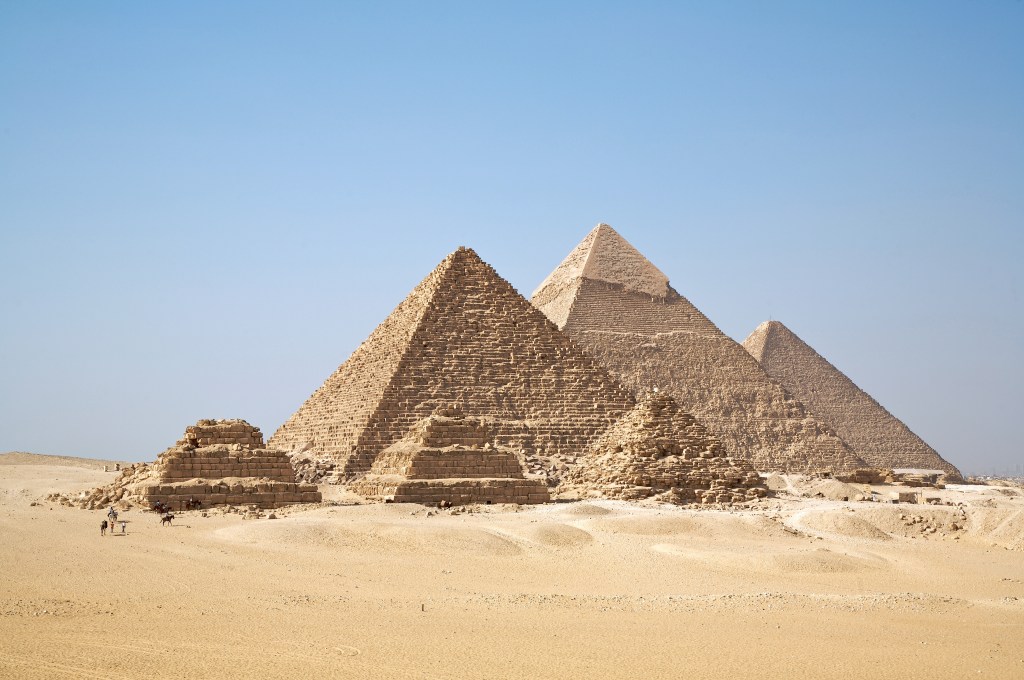
The great pyramid at Giza has intrigued and fascinated people for millenia, myself included. There are also certainly untold theories as to how they were built. I’ve never been to swayed by the aliens built them or that the Egyptians had some sort of wild scifi like technology that we don’t understand. The ancient Egyptians were just as smart as we are today and in some ways more clever having to create huge monuments and structures without computers much less steel and heavy machinery.
The prevailing theory involves a large ramp leading up to the Great Pyramid, that workers would push the large stones along. In order for this to be possible the ramp would be nearly as large as the pyramid itself, and one would expect there to be archaeological evidence of it. There’s seemingly no foundation or compelling evidence that a large ramp was used.
Another interesting one involves using canals and hydraulic lifts to move the stones and raise them to build the pyramids. Understandably there’s quite a bit of skepticism with this theory and it seems fairly implausible, there’s so far been little evidence to suggest this is the method used. The amount of hydraulic pressure required to lift these large stones would be considerable.
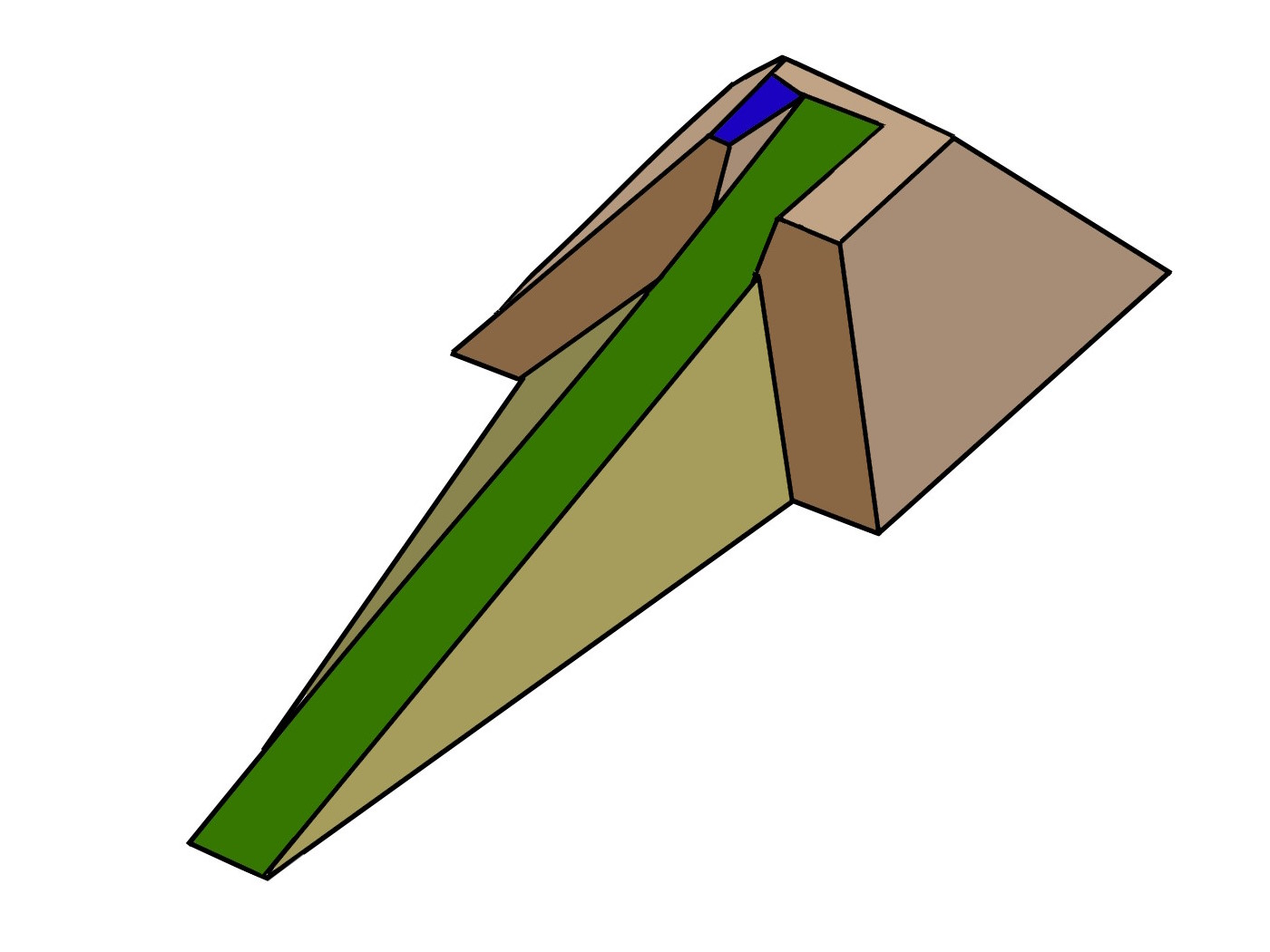
https://www.sciencefocus.com/science/egyptian-pyramids-new-studies : The Mystery of the Great PyramidsI recently came across this Youtube video that explains how the Egyptians may have used multiple ramps and built a larger structure. Once complete they would have then carved the pyramid or shaped it from the apex or top to the bottom. This way they would have been able to check their work and maintain the precise alignment of the edges as they went. This also explains why there’s no evidence of a large ramp leading up to the pyramid, which has been an issue with the current leading theory. The leftovers or carved away stones would then have been used for the other pyramids. This really seems to fit the current evidence and I found it to be quite compelling. Only time will tell if it holds up to scrutiny.
 History Buff Chronicle
Leave a comment